Tibetan
Conjugate VerbsFacts
- Language: Tibetan
- Alternate names: Bhotia, Dbus, Dbusgtsang, Phoke, Tibetan, U, Wei, Weizang, Zang
- Language code: bod
- Language family: Sino-Tibetan, Bodic, Bodish, Early Old Tibetan, Middle Old Tibetan, Late Old Tibetan, Central Tibetan
- Number of speakers: 1070000
- Script: Phags-pa script. Tibetan script, Uchen, Umed and a less-widely known and more priestly style.
More information:
Introduction
Standard Tibetan is a widely spoken form of the Tibetic languages that has many commonalities with the speech of Lhasa, an Ü-Tsang dialect. For this reason, Standard Tibetan is often called Lhasa Tibetan. Tibetan is an official language of the Tibet Autonomous Region of the People's Republic of China. The written language is based on Classical Tibetan and is highly conservative.
The Tibetan Verb
In Classical Tibetan, verbs have from one to four temporal stems distinguished by a vowel and/or consonantal change. For example, the verb གཅོད 'to cut' has the following stems: 'གཅོད' gcod (present), 'བཅད' bcad (past), 'གཅད' gcad (future), and 'ཆོད' chod (imperative). Modern dialects use a great variety of particles and auxiliaries to express tense, aspect, mood, and evidentiality.
Past, present and future tenses are established by a combination of verb stem and auxiliary. Perfective, progressive, and prospective aspects are conveyed by suffixes. Other suffixes indicate evidentiality, like direct evidence, indirect evidence, etc. A reduplicated verb stem in conjunction with perfective conjugation may express regular or repeated action.
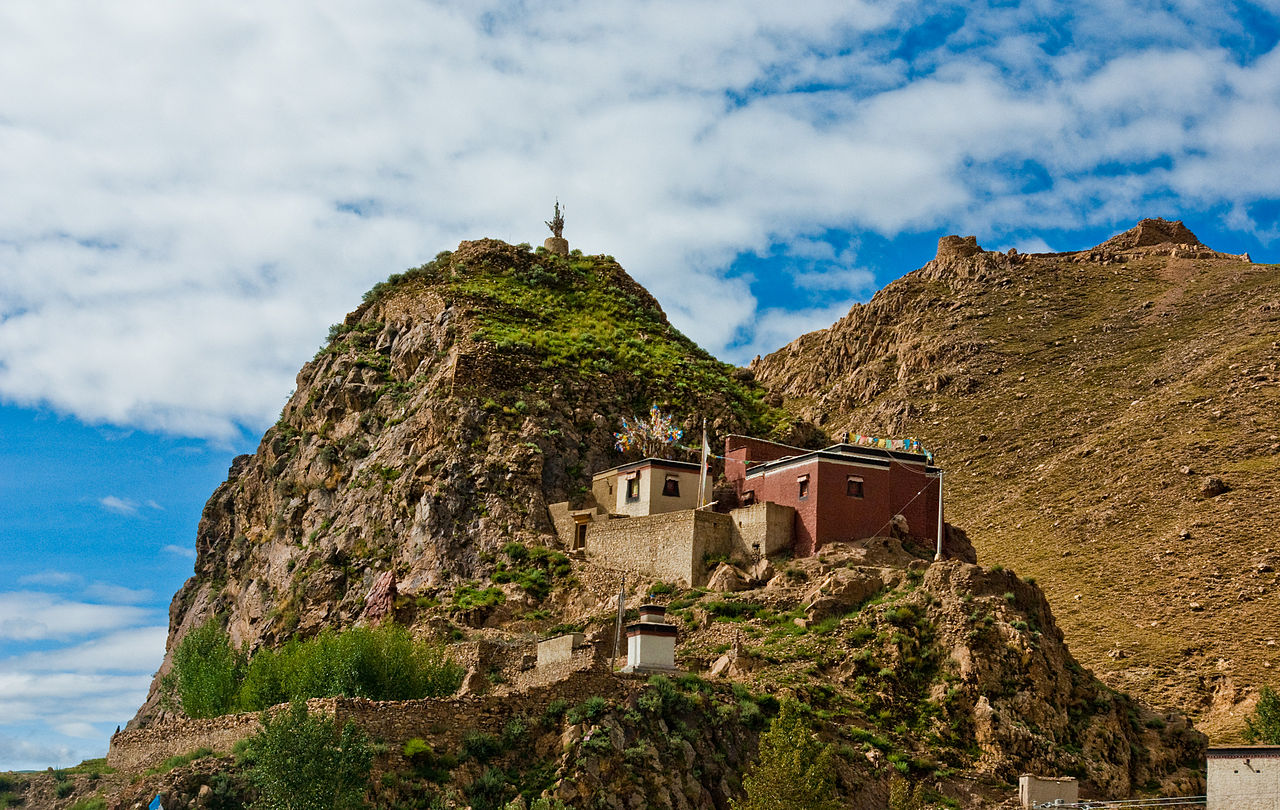
A little Tibetan monastery with destroyed build foundations still present on the road from Shigatse to Mount Everest in 2009
Verblist
ཀླུབ, ཀློག, དཀྲོལ, བཀོད, བཀྲུ་བ, རྐུ, རྐྱལ་རྒྱག, སྐད་བརྒྱབ, སྐད་སྒྱུར་འཇུག་བྱེད, སྐད་ཆ་བཤད, སྐྱུག་པ་ཤོར, སྐྱེ, སྐྱོང, སྐྱོབ་པ, བསྐྲངས, ཁ་བདར་གློད, ཁ་དཔར་གཏོང, ཁོ, ཁོལ, ཁྱགས་པ་ཆགས, ཁྱགས་པ་བཟོས, ཁྱགས་ཤུར་གློད, ཁྲིད, ཁྲིམས་ལ་བསྐྱལ, ཁྲོམ་གཟིགས་གནང, མཁོ, མཁྱེན, འཁོར, འཁོར་ལོ་བཀག, འཁྱག, འཁྱགས, འཁྲིད, འཁྲུད, འཁྲོལ, གངས་བཏང, གངས་ཤུར་བཏང, གོ, གོག, གོང་བཅག, གོན, གོམ་པ་རྒྱག, གྱོན, གྲོངས, གླས, གློ་བརྒྱབ, དགོས, བགོད, བགྲང, འགས་པ, འགོག, འགོང, འགོད, འགྲུབ, འགྲོ, འགྲོངས, རྒལ, རྒྱ, རྒྱ་འདྲེ, རྒྱན་རྩེད་རྩེས, རྒྱལ, བརྒྱུད, སྒུག, སྒོ་ལྕགས་བརྒྱབ, སྒོ་ལྕགས་ཕྱེ, སྒྱུར, སྒྲིག, སྒྲིལ, སྒྲུབ, སྒྲོ, བསྒྲུགས, ངུ, སྔ, གཅག་གཏོར་བྱས, གཅོད, ཆགས, ཆམས་པ་ཕོག, ཆུ་རྐྱལ་རྒྱག, མཆོད, འཆད, འཆི, འཆུ, ཇག་ཁྲིད་བྱས, མཇལ, མཇུག་སྒྲིལ, འཇིག, འཇིབ, འཇིབས, འཇོམས, རྗོད, བརྗེད, ཉན, ཉམས, ཉར, ཉལ, ཉི་སྲེག་བཏང, ཉེན་ག་ནས་བཏོན, ཉོ, ཉོས, གཉའ་གནོན་བཏང, མཉན, རྙིང, རྙེད, སྙམ, གཏམ, གཏམས, གཏུག་དྲི་བཏང, གཏུག་དྲི་ཤོར, གཏུམ, གཏོང, གཏོམ, གཏོར, བཏགས, བཏང, བཏོན, རྟོག, ལྟ, ལྟབ, ལྟམ, ལྟམས, ལྟུང, ལྟེམས, ལྟོགས, བལྟམས, སྟོང, སྟོན, ཐུག, ཐུབ, ཐེ, ཐེབས, ཐོབ, མཐོང, འཐག, འཐུང, འཐུམ, དག་ཆ་བྲིས, དིམ, དུས་ཚོད་བཟོས, དྭང་བླངས་བྱས, དྭངས, དྲན, འདག་བརྒྱབ, འདིང, འདེབས, འདོད་པ, འདོན, འདོམས, འདྲེ, ལྡག, ལྡན, ལྡིར, ལྡེག, ལྡོག, སྡུད, སྡུར, སྡོད, ན, ནུབ, གནང, གནད, གནས, རྣག་བསགས, སྣུབ, སྤམ་ཤོར, སྤྲད, སྤྲིང, སྤྲུལ, ཕུད, ཕྱི, ཕྱིར་སློག་བྱས, འཕུར, འཕྱོ, བོན, བྱང, བྱུང, བྱེད, བླུགས, བློ་མཐུན, དབང་སྒྱུར, དབང་སྒྱུར་བྱས, དབུགས་རྒྱག, འབབ, འབའ, འབྱང, འབྱར, འབྱེ, འབྱེད, འབྱོར, འབྲི, འབྲུག་སྐད་རྒྱག, འབྲུལ, སྦར་བྲད་བརྒྱབ, སྦྱང, སྦྱིན, སྦྱོང, སྦྱོར, མིང་འདོགས, མིང་འདོགས་རྒྱག, མིན, མེ་མདའ་བརྒྱབ, མེད, མྱུ་གུ་འབུས་པ, མྱོང, དམའ་འབེབ་བྱས, སྨན་བཅོས་བྱས, སྨྲ, གཙང་མ་བཟོས, བཙན་འགོག་བྱས, བཙན་གནོན་བྱས, བཙན་འཛུལ་བྱས, བཙབས, བཙལ, བཙེམས, རྩི, རྩིག, རྩེ, རྩེད, རྩོམ, བརྩེ, ཚ་ལ་བརྒྱབ, ཚ་ལ་བཏང, ཚེས, མཚན་གསོལ, འཚམས་འདྲི་ཞུས, འཚོང, མཛད, འཛིན, འཛུད, འཛུམ, འཛུམས, ཞ་རློན་འཐེན, ཞོགས, གཞས་བཏང, གཞིས་ཆགས་ལ་ཡོང, གཞུ, བཞག, བཞད, བཞར, བཞེས, ཟ, ཟ་ཕྲུག་ལང, ཟུམ, གཟིགས, གཟིམ, བཟོ, འོང, ཡལ, ཡིག་གཟུགས་ཕབ་སྒྱུར་བྱས, ཡིན, ཡོང, ཡོད, རག, རག་ལས, རི་དྭགས་བརྒྱབ, རི་མོ་བྲིས, རིག, རུལ, རེ, རེད, རོལ, རྫོང, རློག, རློབ, བརླགས, ལང, ལུག, ལེན, ལྷད་མེད་བཟོས, ཤར, ཤི, ཤུ་བརྒྱབ, ཤེས, ཤོག, ཤོར, བཤོས, ས་བོན་སྨིན་པ, སད, སེམས, སེམས་ཤོར, སྲིད, སྲུལ, སློབ, སློབ་ཁྲིད་བྱེད, གསན, གསུང, གསོད, གསོན, བསད, ཧྲུལ.